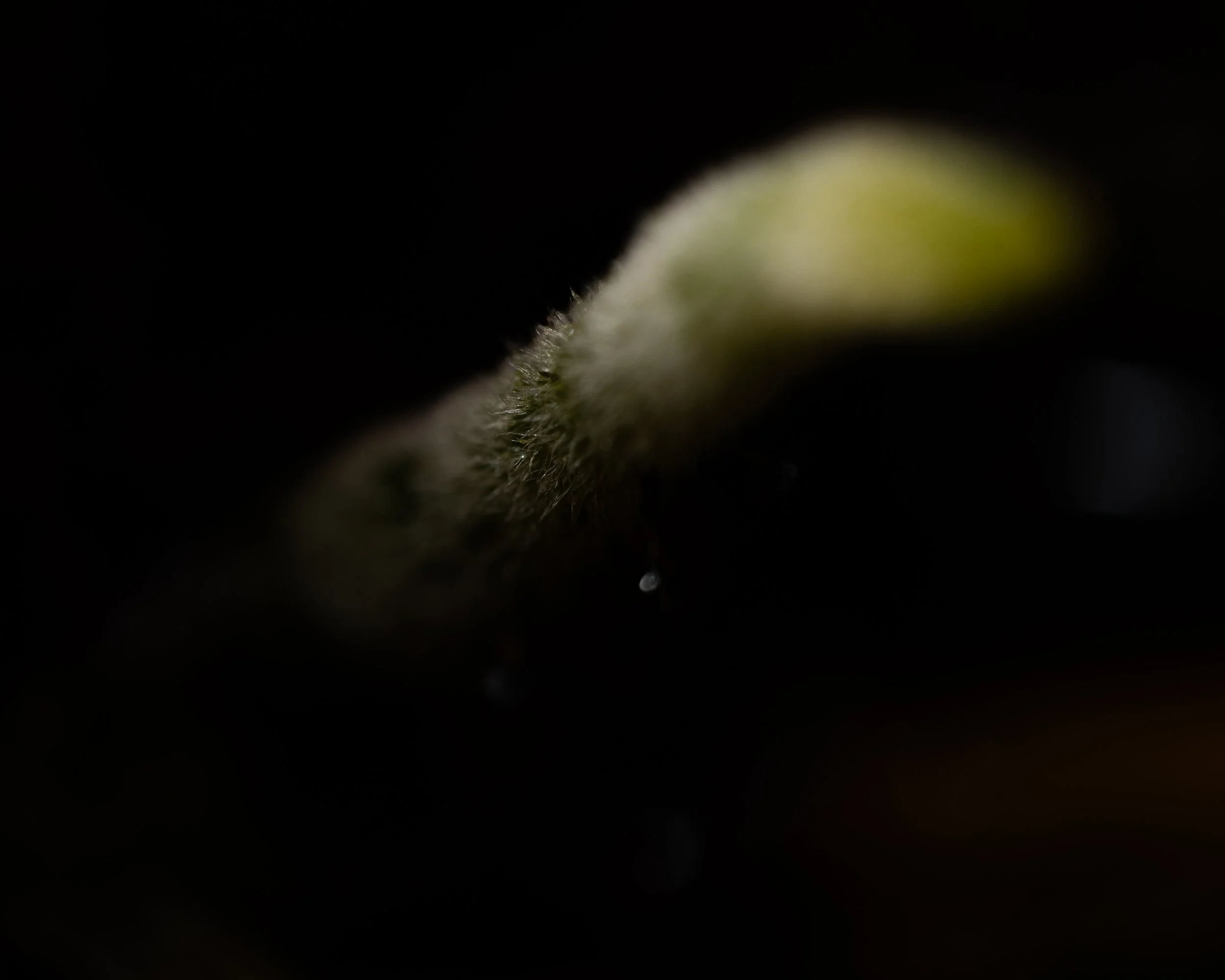
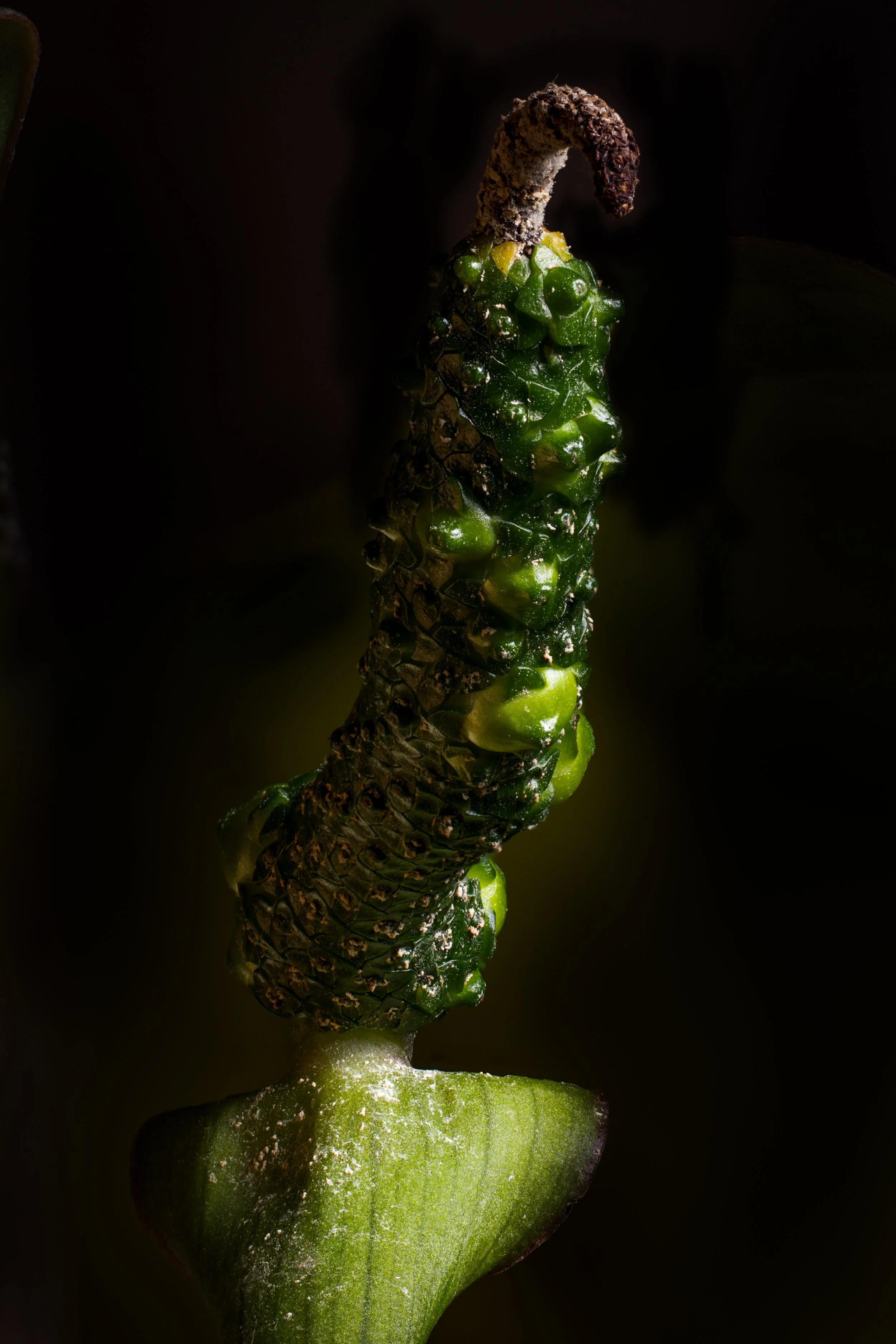
Low Density vs High Density Fun.
Some windows for shooting are ninety seconds long, not ninety minutes. That's not a hypothetical — it's most weeks. The two frames below were both taken inside a window like that, on the same decomposing root, a week apart. Neither one waited for ideal conditions, because ideal conditions don't reliably show up, and waiting for them is its own failure mode. It has a name in the psychology literature: attention residue.
Sophie Leroy's 2009 research on task-switching (Sourced) found that when people move to a new task before finishing the last one, part of their attention stays behind — measurably reducing performance on whatever comes next. Every reflexive check of the phone, every low-effort scroll between real tasks, leaves residue. It's not that the scroll itself is bad; it's that it's cheap, and cheap has a cost on the other side of the ledger.
That's the distinction worth naming plainly: low-density fun and high-density fun. Low-density fun asks little of you and gives back proportionally little — it's available instantly and it doesn't compound. High-density fun costs more up front (attention, discomfort, a willingness to produce something imperfect) and it does compound: each rough attempt keeps you in contact with the material, so the next attempt has something to build on. Wolfram Schultz's dopamine research, and Anna Lembke's clinical synthesis of it in Dopamine Nation (Sourced), describe part of the mechanism — a nervous system that gets too much easy reward raises its own threshold, so the harder, slower payoff starts to feel like it isn't worth reaching for.
The honest complication: this isn't a pure willpower story, and it's worth resisting the version of it that moralizes. Walter Mischel's marshmallow experiments were widely read as proof that delayed gratification alone predicts life outcomes. A 2018 replication by Watts, Duncan, and Quan (Sourced), controlling for family background and material stability, found the effect shrank substantially once those were accounted for. Some of what looks like willpower is bandwidth. Rest matters too — idle, unstructured attention has its own documented role in incubating ideas. The claim here isn't "never rest." It's narrower: notice which rest keeps you in contact with the work, and which one quietly erases it.
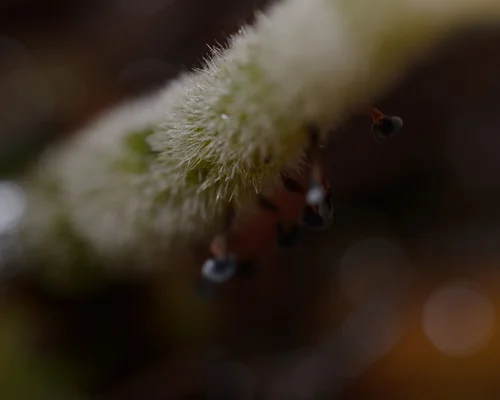
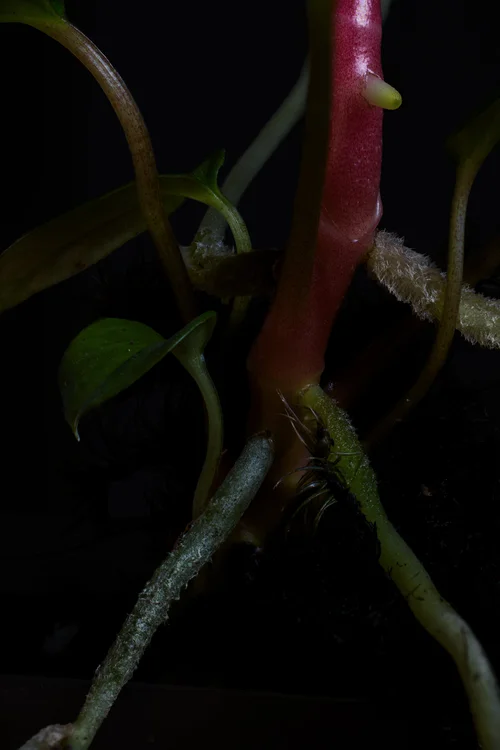
Two attempts at the same root, both made in stolen time. Not a better photograph and a worse one — a lower-density minute and a higher-density one. Search "attention residue" if you want to keep pulling this thread.