The Man Who Turned the Universe Into a Triangle
Julian Barbour has spent six decades asking what time is. His answer starts with three points and a shape, and ends with time running away in two directions from the moment the universe was plainest. With a model you can run and the strongest objections to it.
Warming the Soil
Since 2013, buried cables have kept patches of a California forest floor 4 °C warmer, down to about a meter. Seven and a half years of samples show that depth shapes which microbes live in the soil about fourteen times more than the heat does. The heat still matters: the warm plots breathe out 30 to 37% more carbon dioxide.
Did the Big Bang Actually Happen?
Yes. What a new calculation questions is the infinitely dense point it supposedly started from. Read against a clock made from part of the universe itself, the odds of finding it at zero size thin out and never arrive. Drag the clock and watch the fade.
Nobody Asked for Haskell
Researchers nudged a coding model from the outside, once for a job and once for a language, and it wrote a Haskell program nobody had asked for. A new preprint finds that capable models store a programming job once and reuse it across languages, and shows where that picture breaks down.
Around the Garden
Ten photographs from the editor’s garden and four ways to handle them. Slide down a flower stalk, turn up the light on a leaf with only its veins left, drag a magnifying glass across two mushrooms, step in close.
What Survives the Notation
Bertrand Russell's hardest books are written in symbols almost no one uses now. Three of them, read three different ways, and the thinkers who broke and rebuilt his work show what a reader keeps once the notation is gone.

The Date in the Gut
Two peoples in Bolivia and Tanzania, whose ancestors parted tens of thousands of years ago, carry more than 1,200 of the same gut bacteria. The bacteria's DNA also holds a date for when their lines last traded genes: about 17,000 years ago. Scroll to see how a clock is read out of the letters.
The Moving Edge
Many of the record-distance galaxies reported since the Webb telescope began work started as an estimate read from one dark edge in their light. When a team checked 183 of those estimates with a spectrograph, 48 held up. A short illustrated lecture on the edge, how it moves, and the nearer galaxies that can fake it.
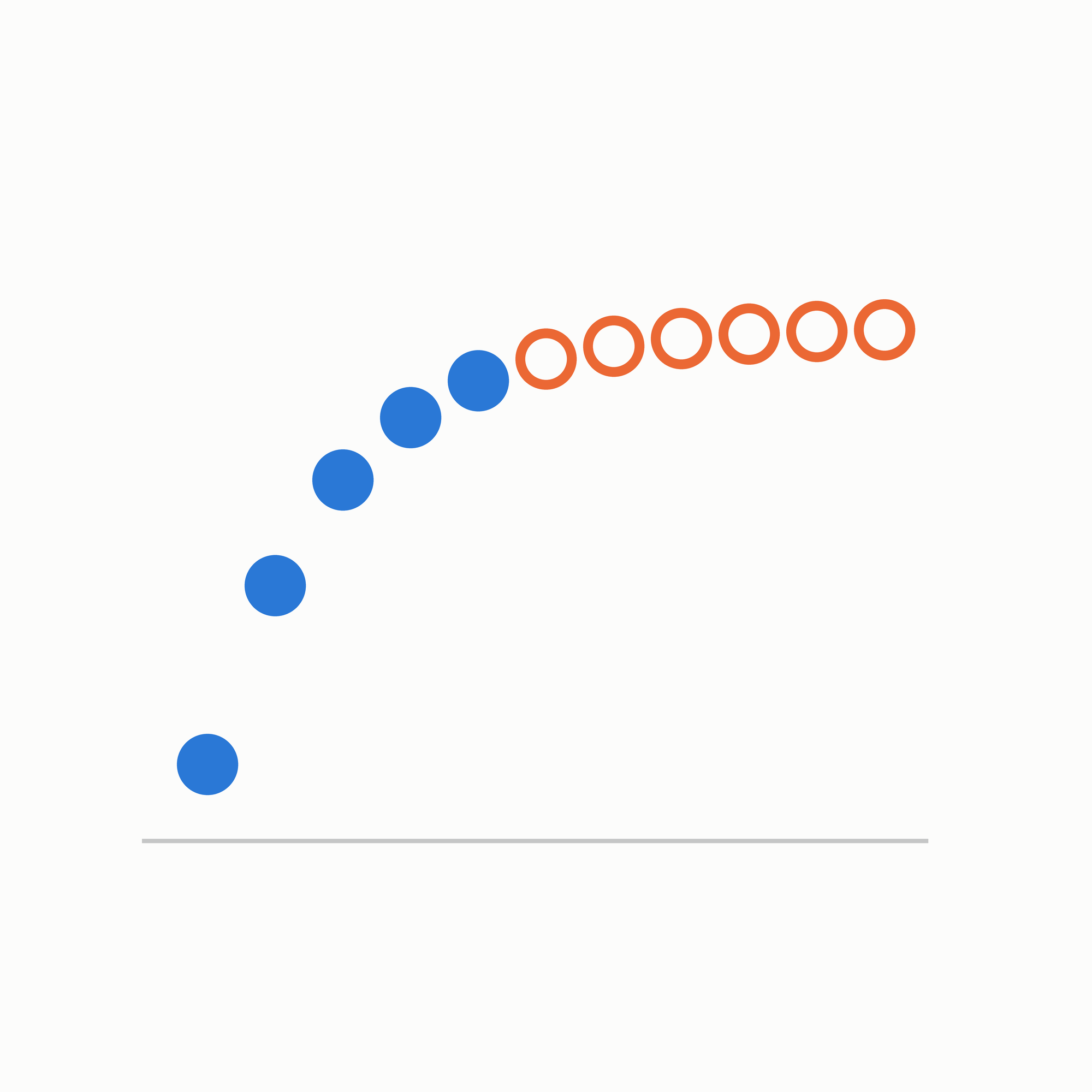
How Many Species Does a Job Take?
Clean water, pollinated crops, carbon stored in the sea: each is work done by living things. A synthesis of 423 studies finds that some jobs improve with every species added, some level off early, and some rest on one or two.
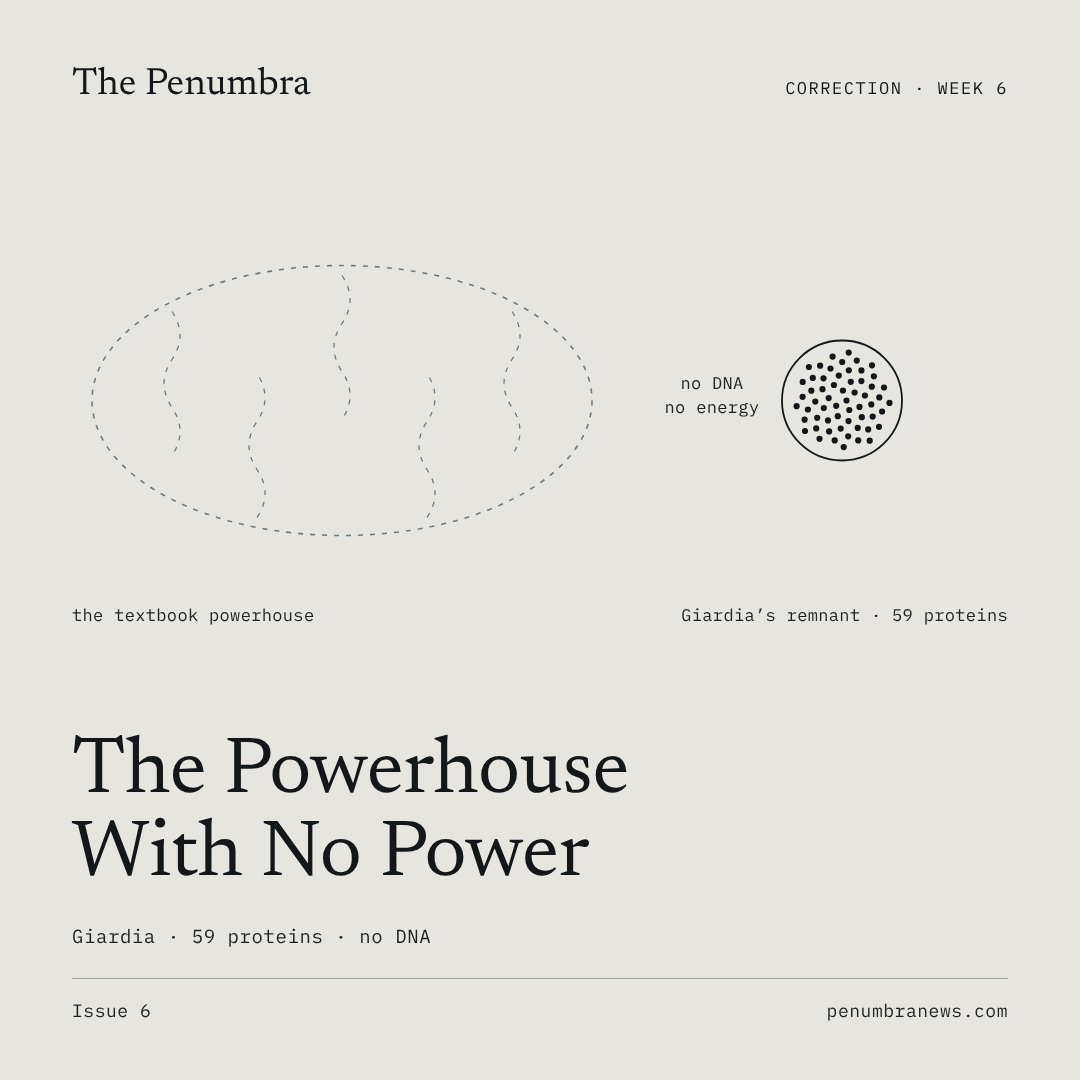
The Powerhouse With No Power
School diagrams call the mitochondrion the powerhouse of the cell. In the parasite Giardia, what remains has no DNA, carries 59 proteins, and makes no energy.
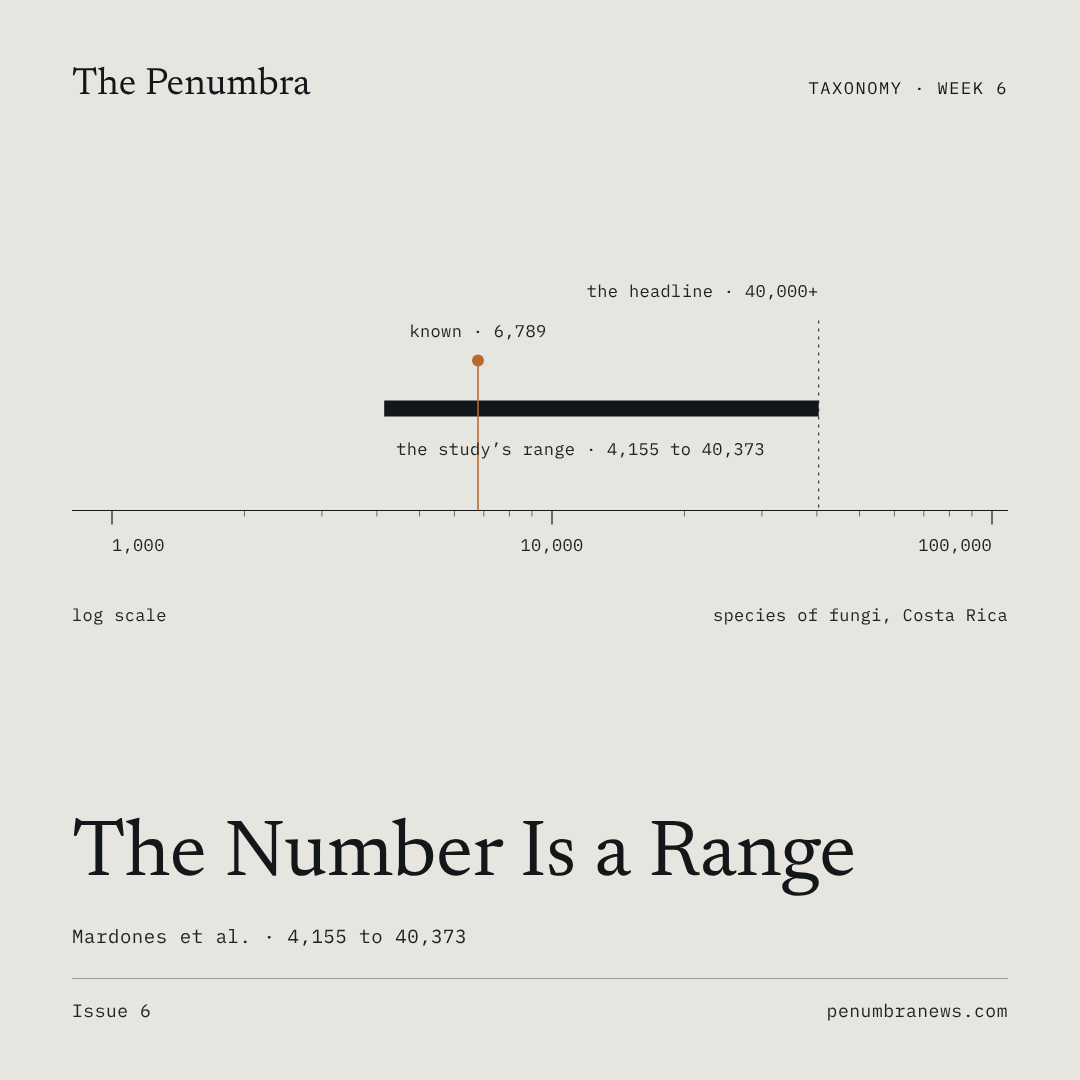
The Number Is A Range
Headlines said Costa Rica may hold more than 40,000 species of fungi. The study behind them gives a range, and 40,000 is its top.
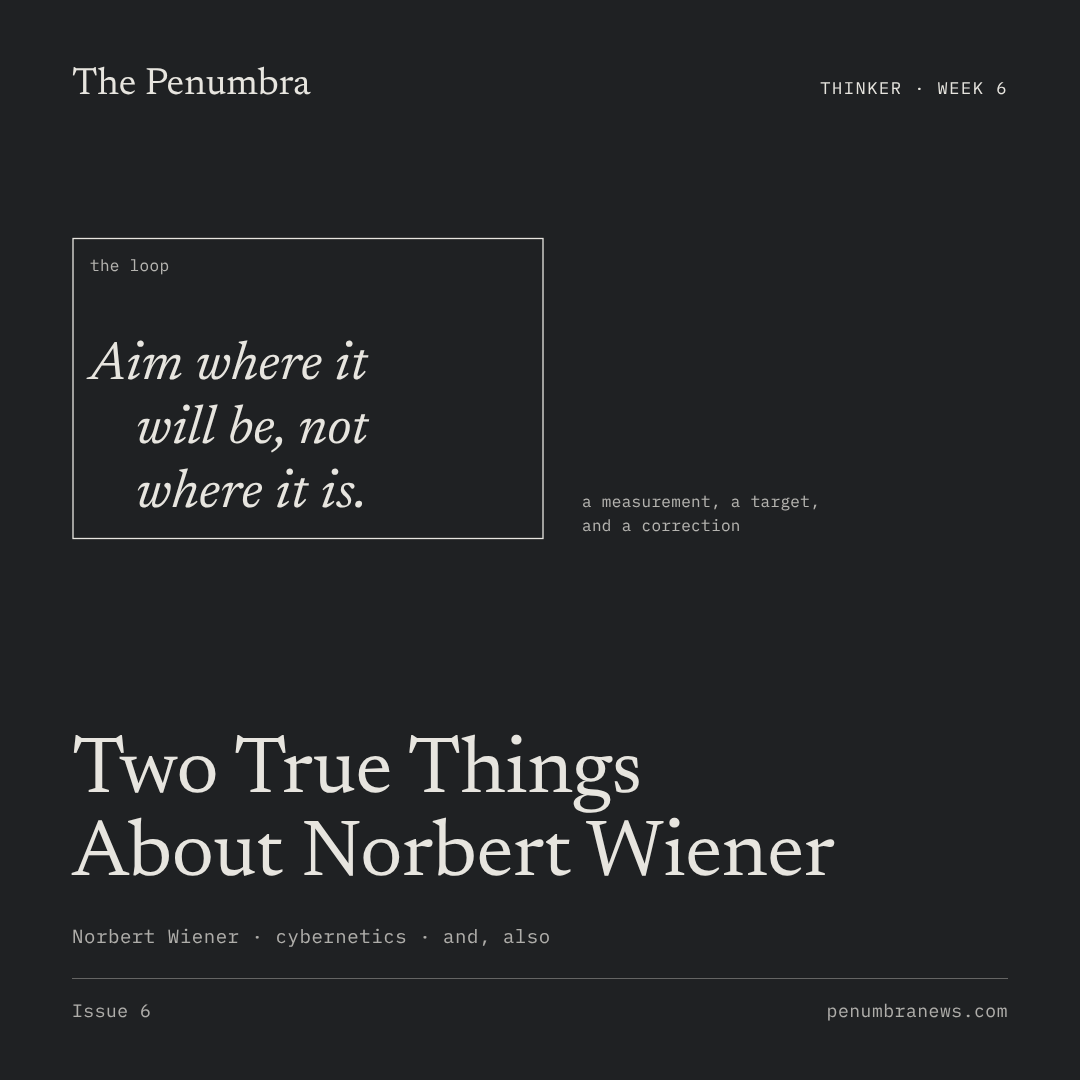
Two True Things About Norbert Wiener
Norbert Wiener's theory of feedback grew out of aiming guns at aircraft. A signed essay holds both facts: the idea is true, and its origin is hard to look at.
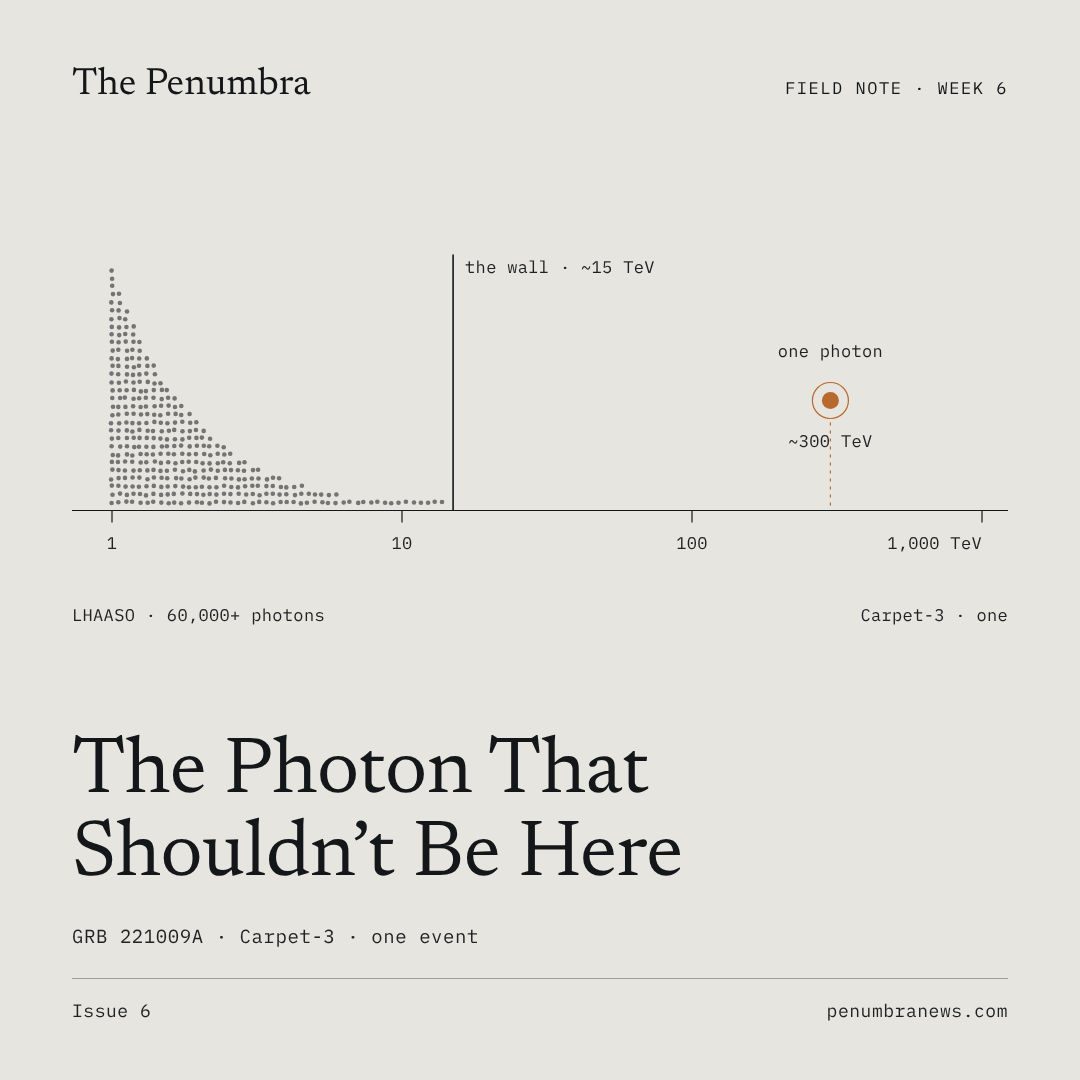
The Photon That Shouldn’t Be Here
A detector in the Caucasus recorded one particle of light at about 300 trillion electron volts from the brightest explosion on record, far past where the universe should block it. If it is real, it points beyond the Standard Model.

Low Density vs High Density Fun.
Two photographs of decomposing roots, one week apart, both taken in borrowed minutes. The difference between them isn't skill. It's whether the minute was spent in contact with the material or spent somewhere else.

The Tree Got a Rule.
Fall colors- trees get personhood in a Quebec municipality.
One more entry to a category that already includes corporations and ships. What changes, legally, when a tree joins the list of things that can hold rights

Bryce DeWitt, and the Equation With No Time In It
In 1965, two physicists killing time in an airport terminal wrote down an equation with no time in it. Each gave it a different name, for a different reason. The name that stuck was neither one's.

Göbekli Tepe / Poverty Point
Göbekli Tepe predates farming. Poverty Point predates the wheel reaching North America — no metal, no writing, built anyway. Set on the same timeline, the two sites answer different versions of one question: what does monumental building actually require?
Black Hole Star
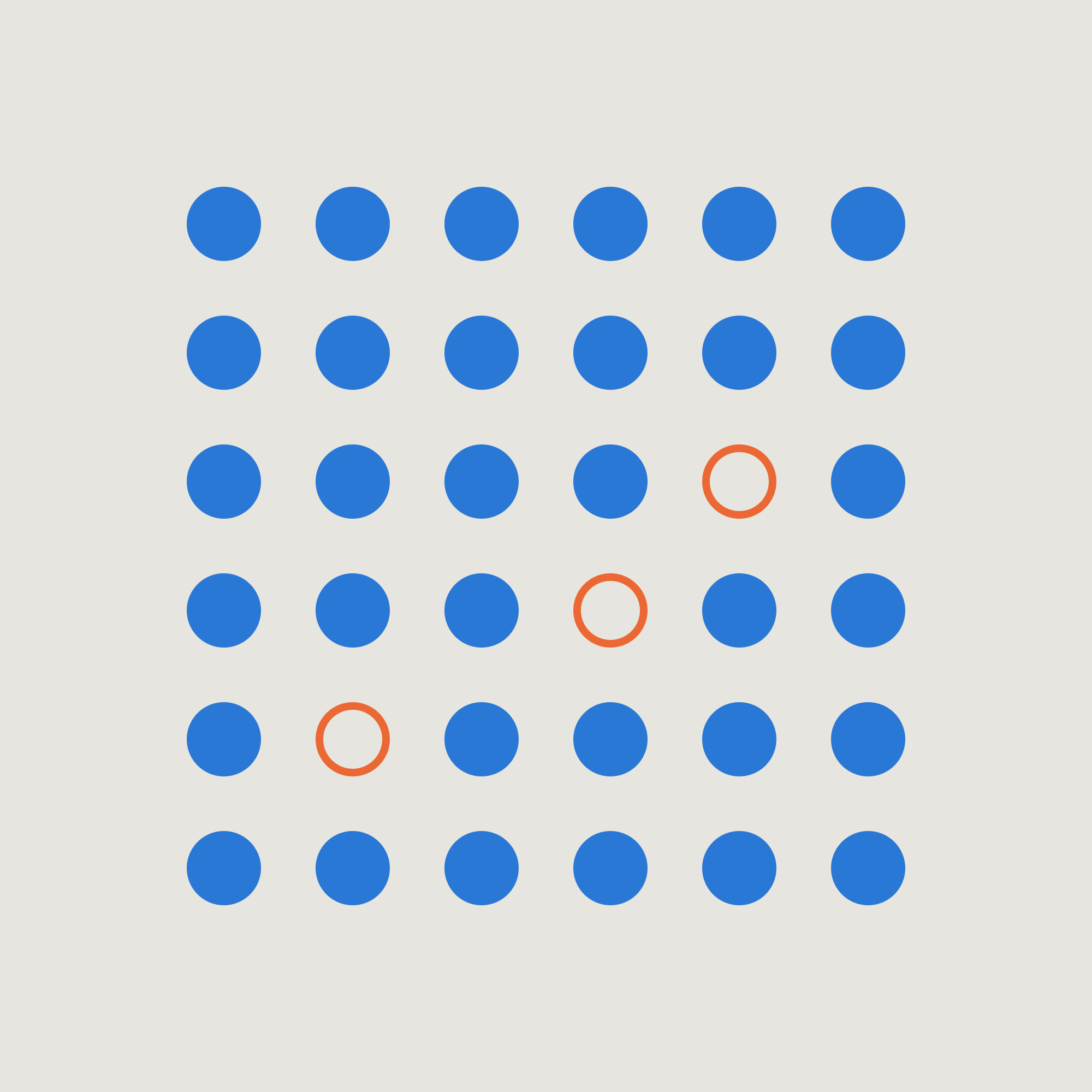
In August 2026 the press announced a new kind of thing in space. The thing had been sitting in a public archive since 2023. What was new was the agreement about what to call it.